
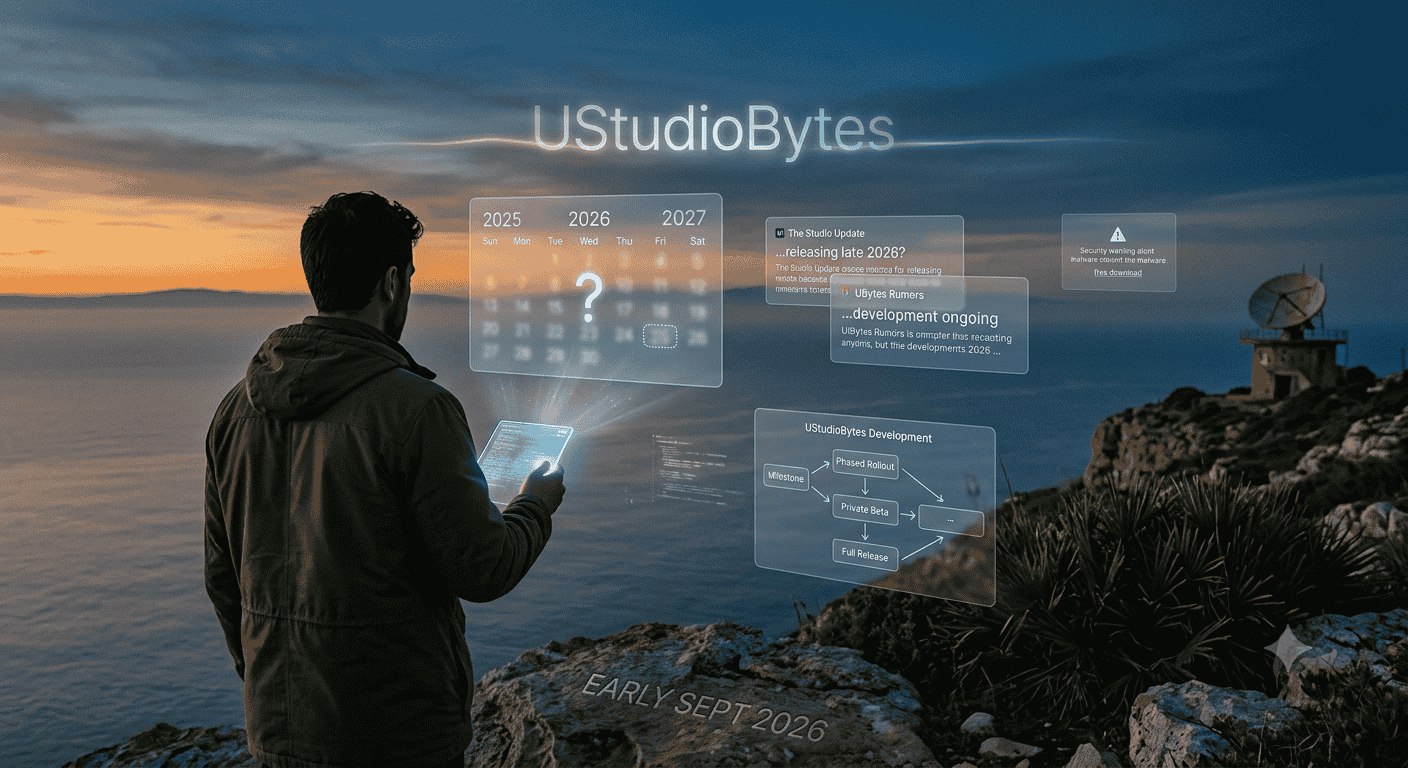
What UStudioBytes Is — and Why the Answer Varies by Source
Depending on which article brought you here, you've already read at least one confident description of UStudioBytes — and there's a good chance it contradicts what the next result says.
Some pages describe it as an enterprise video platform for internal communications, built on top of uStudio's existing infrastructure. Others describe something completely different: a content publishing site or edtech destination, not downloadable software at all, where creators host and monetize educational material. A third category frames it as a broad all-in-one creative workspace, which could mean almost anything. These aren't minor differences in emphasis. They describe fundamentally different products, and no source bothers to acknowledge the contradiction.
Part of the confusion traces back to the parent company. uStudio is an established enterprise video platform — it helps organizations manage, distribute, and measure video content for internal audiences like employees and training teams. That's the verified product with an actual customer base. UStudioBytes appears to be either a new product line extending that infrastructure, a separate consumer-facing offering, or something else entirely depending on who you ask. The official ustudio.com site is the right place to verify current product positioning before any publication date or feature claim gets taken at face value.
The honest situation is this: "UStudioBytes" is being written about heavily, but what the writers are actually describing varies so much that some of them are almost certainly not writing about the same thing. That's worth knowing before you spend any more time reading release date speculation. The rest of this piece tries to sort out what's actually been reported, what's been invented for clicks, and what you can do right now if you want real access.
The Release Date Confusion: Why No One Can Give You a Confirmed Date
There is no publicly confirmed, officially verified release date for UStudioBytes. That's the answer most pages won't give you directly, because admitting it means admitting the dates they're publishing are unsubstantiated.
What's actually circulating online is a set of dates pulled from secondary blogs, none of which cite a press release, an official announcement, or any named source inside uStudio. "August 2025," "October 25, 2025," "Q4 2025," "late September" — these aren't different interpretations of the same verified fact. They're independent guesses dressed up in confident language.
The hedging language is the tell. Phrases like "expected to launch," "reportedly," "widely reported," and "credible sources suggest" are not confirmations. They're a writer's way of stating a date while avoiding accountability for it. "Widely reported" just means other blogs wrote the same unverified date first.
Here's a side-by-side look at what's actually being claimed:
| Source Type | Date Claimed | Hedging Language Used | Primary Source Cited? |
|---|---|---|---|
| Tech review blog | August 2025 | "expected to launch" | No |
| Software ranking site | October 25, 2025 | "reportedly releasing" | No |
| Content/edtech blog | Q4 2025 | "widely reported" | No |
| Download aggregator | "Late September this year" | "credible sources suggest" | No |
Not one of those sites links to an official uStudio announcement or product page confirming these dates. The column on the right tells you everything you need to know about how much weight to give any of them.
The Phased Rollout Timeline: What Has Been Reported (With Caveats)
The timeline most sources agree on runs roughly like this: a private beta aimed at enterprise clients reportedly kicked off in Q2 2025, early access opened (or was supposed to open) somewhere between August and October 2025, a Version 1.0 launch has been pegged to Q4 2025, and a broader regional rollout is expected to continue into 2026. That's the shape of the reported story.
But "reported" is doing a lot of work in that sentence. None of those stages have been publicly confirmed by uStudio in a press release or official announcement that secondary sources actually link to. The Q2 beta date, the August early access window, the Q4 1.0 launch — these dates have been passed from blog to blog without anyone tracing them back to a primary source. Before taking any of them as settled, check uStudio's official communications directly.
What that timeline means for you in practical terms depends on who you are. Enterprise buyers and corporate clients were apparently first in line — if you're at an organization considering a volume or direct-sales purchase, it may be worth contacting uStudio's sales team to ask about current access. If you're an individual user, the most reliable path right now is checking the official waitlist on uStudio's website. Regional availability is another open question; several sources mention a staged geographic rollout, but no source specifies which regions are live versus still pending.
The short version: the phases described above are the most consistently cited, but they're reported claims, not a confirmed product roadmap.
What UStudioBytes Is Actually Supposed to Do (Features Reported)
The features you'll find listed across review and roundup pages are consistent enough that they're probably drawn from the same marketing materials — but consistent doesn't mean confirmed. Here's what keeps appearing, with an honest note about sourcing.
Short-form video creation for internal communications shows up in nearly every writeup, alongside video hosting, podcast tools, and cloud-based media management. Secure gated communities and subscription tiers get mentioned frequently too, pointing toward a model where organizations control who sees what, and can potentially charge for access to content.
The target audiences described are corporate communications teams, educators, marketers, and remote or hybrid workforces — which tracks with what uStudio (the parent platform) has historically served. That lineage is actually the most useful signal here: uStudio has documented, publicly verifiable functionality in enterprise video hosting, so features that extend that core are more plausible than ones that represent a total pivot.
What's harder to know is which of the following are live features, which are roadmap items, and which are wishful-thinking extrapolations from the marketing copy. Before treating any of this as a buying signal, check the official product page at ustudio.com.
| Reported Feature | Likely Use Case |
|---|---|
| Short-form video creation | Internal comms, training updates |
| Video hosting & management | Corporate media libraries, onboarding |
| Podcast tools | Leadership messaging, L&D content |
| Secure gated communities | Private team channels, client portals |
| Subscription tiers | Content monetization, paid courses |
| Cloud-based media management | Distributed/remote team workflows |
The table above reflects what's been reported — not a confirmed feature list.
Is UStudioBytes Available Right Now? How to Check Access
The short answer is: it depends on who you are and where you're looking.
If you're an individual user hoping to sign up today, the most reliable first step is going straight to ustudio.com and checking for any active waitlist or early access signup. That's not a guarantee you'll find one — availability has shifted across reported rollout phases — but it's the only starting point worth trusting. Do not sign up through third-party sites or download anything from unofficial sources. At least one secondary source has flagged that verified, safe download links aren't widely confirmed, which is a real warning sign given how many keyword-farming pages have latched onto this product name.
If you're a business buyer, the picture looks slightly different. The reported rollout pattern has been enterprise-first, meaning corporate clients may have gotten access through direct sales channels before any public availability opened up. Contacting uStudio's sales team directly is the fastest way to find out what's actually available for organizations right now.
The third path — the content-platform version that some sources describe as a publishing or edtech website rather than downloadable software — remains genuinely unclear. It's possible this is a separate product, a rebranded offering, or simply a misidentification by sites targeting the same keyword. Until official documentation clarifies this, treat any "access it here" links for that version with skepticism.
The actionable checklist is short: visit ustudio.com, look for a waitlist or contact form, follow their official channels for announcements, and ignore any site offering a download that isn't hosted on the official domain.
Why There’s So Much Conflicting Information Online
Here's the uncomfortable truth: most of the articles ranking for "UStudioBytes release date" were written by people who have never used the product, never contacted uStudio, and possibly never read anything beyond other articles ranking for the same keyword. The goal was to capture search traffic, not to inform you.
This is a well-worn pattern in SEO publishing. A product gets buzz, someone publishes a speculative article with a plausible-sounding date, that article gets scraped and paraphrased by a dozen other sites, and suddenly there's a wall of confident-seeming pages that are all just citing each other. No primary source anywhere in the chain.
The categorical confusion around UStudioBytes is a direct symptom of this. Sites describing it as a video game, an edtech platform, and enterprise software aren't covering different versions of the same product — they're covering different guesses. The content was written to match a keyword, not a product.
None of that helps you. So here's the filter worth applying: if an article about UStudioBytes doesn't link to an official uStudio announcement, a verified press release, or a named journalist at a recognized tech outlet, treat the dates and feature claims in it as unverified. That includes specific launch windows, pricing tiers, and feature lists published without a traceable source.
The official uStudio domain, confirmed press releases, and bylined reporting from outlets like TechCrunch or The Verge are the only sources worth treating as reliable until an official launch is confirmed.
How to Stay Updated on the Official Release
Here's the honest caveat before the practical advice: the specific URLs and social handles I'd normally drop here need to be verified against the live uStudio website before this article publishes. Secondary blogs have been recycling each other's unconfirmed links throughout this topic, and repeating those here would make this piece part of the same problem it's been critiquing.
That said, the approach is straightforward. Go directly to ustudio.com and look for any waitlist, early access signup, or newsletter link on the homepage or product pages. If a UStudioBytes-specific subdomain or microsite exists, it will be linked from there rather than from a third-party article. If there's a signup form, use it — that's the fastest way to get notified the moment access expands.
For independent coverage that isn't tied to SEO-farming, the enterprise video and internal communications beat gets covered at TechCrunch (particularly their enterprise and startup verticals), The Verge's business and tech sections, and trade outlets like Streaming Media or TVBEurope for B2B video infrastructure news. Reporters at those outlets are accountable for what they publish in a way that a keyword-targeted blog post simply isn't.
One last thing: if you see a social account or download link for UStudioBytes somewhere that you can't verify traces back to the official uStudio brand, treat it as unconfirmed until you've cross-checked it against the primary domain. The download safety concern flagged earlier in this piece applies here too.
FAQ
What is UStudioBytes and who makes it?
UStudioBytes is a product connected to uStudio, a video platform company. Depending on the source, it's described as an enterprise internal-comms tool, a content publishing platform, or a creative workspace — and those descriptions don't always align.
Has UStudioBytes officially launched yet?
No confirmed public launch has been verified through official channels as of this writing.
What was the original release date?
No single date has been officially announced. Dates circulating online — August 2025, October 2025, Q4 2025 — all originate from secondary blogs, not uStudio directly.
Why do different sites give different dates?
Most published articles are keyword-targeting pieces with no direct source. They repeat each other, not official announcements.
Is it free or paid?
Subscription tiers have been reported, but pricing hasn't been officially confirmed.
Can I download it right now?
Avoid unofficial download sites entirely. Check ustudio.com for any waitlist or access program.
What features will it include?
Reported features include video hosting, podcasting tools, internal comms, and gated content — none formally confirmed at publication.
Is it software or a website?
Likely browser-based, but this hasn't been officially clarified.
Who is it designed for?
Primarily enterprise and corporate teams, with some sources also citing educators and content creators.
What happened to the beta?
Enterprise clients reportedly received early access, but public beta status is unconfirmed.
How does it differ from competitors?
Unknown until official feature documentation is published.
Will it be available globally?
A regional rollout into 2026 has been reported, but no official geographic details exist.
