
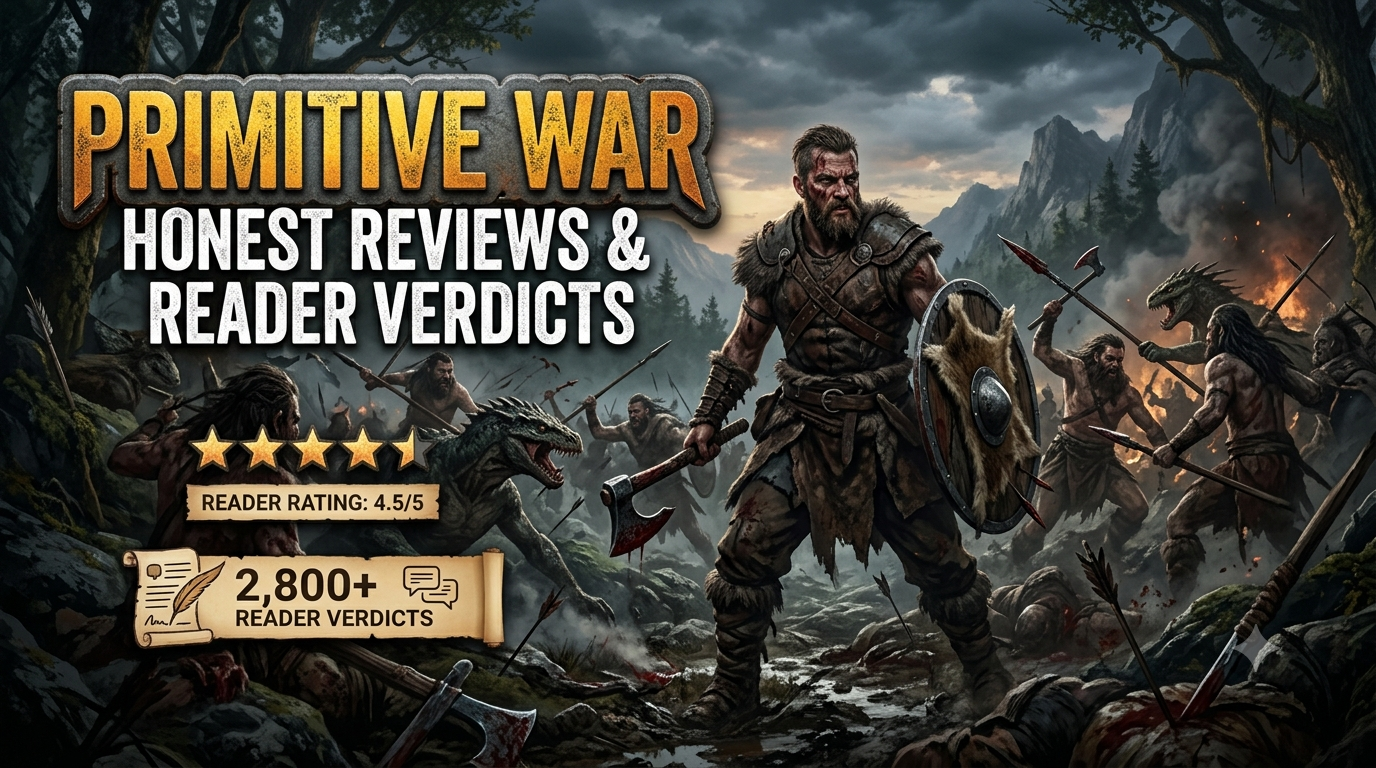
What Kind of Book Is This, Really?
Primitive War sits at a specific intersection that a lot of readers miss going in: it's military horror with creature fiction at its core, not a survival thriller or a war drama with some monsters sprinkled in. If you pick it up expecting something in the vein of The Things They Carried with a twist, you'll be confused and probably disappointed. If you go in knowing it's closer to a Vietnam-era creature feature — think serious gore, soldiers getting hunted, and action that doesn't slow down to ask big questions — you'll be in the right headspace.
The tone is blunt and often brutal. Ethan Pettus doesn't ease you into the violence; the book earns its horror label pretty quickly. Pacing is propulsive more than atmospheric, though the jungle setting does real work in building dread between set-pieces. This isn't slow-burn horror. It moves.
Pettus self-published Primitive War, which matters for setting realistic expectations. That's not a knock on the concept or the ambition — both are genuinely strong — but the indie origins show in places. Some readers will notice uneven editing, occasional repetition in the prose, and character work that doesn't always get the space it needs. None of that kills the experience if you're the target audience, but it's worth knowing upfront rather than being blindsided by it two chapters in.
Bottom line on genre: military horror, creature fiction, high gore. That's the box. Whether you're the right reader for it depends entirely on whether that box sounds appealing.
Plot Overview (Spoiler-Light)
The Vietnam War setting isn't just backdrop here. Pettus chose it because the jungle was already a place where American soldiers felt hunted, where visibility was zero and the enemy could be anywhere. That psychological reality, the constant dread of something you can't see coming, is exactly what creature horror needs to work. It gives the monsters a plausible home before you've even met them.
The premise is straightforward: a squad of U.S. soldiers operating in the Vietnamese jungle encounters something the war didn't prepare them for. Not the Viet Cong. Not booby traps. Something that treats them as prey. The book follows their attempt to survive contact with predatory creatures that are fast, intelligent, and very good at using the terrain against them.
That's about as far as a spoiler-light summary can responsibly go. The creatures' nature, the squad's fate, and what the military knows (or doesn't) are all things best discovered on your own. There's a spoiler section later in this piece if you want the full breakdown before buying.
What's worth flagging upfront: this isn't a slow-burn psychological horror novel where the monster stays offscreen until the final act. Pettus gets to the violence early and often. If you're coming in expecting a literary war narrative that gradually tips into horror, adjust your expectations. This is a creature feature in novel form, and it commits to that completely.
Writing Quality & Prose Style
Pettus writes with energy. That's the first thing you notice — sentences move, action sequences don't stall, and the jungle descriptions have a genuine tactile nastiness to them that serves the horror well. When the book is firing, the prose gets out of its own way and lets the dread do the work.
The military dialogue is a mixed bag. Some of it lands convincingly, with the right cadence and vocabulary for men who've been running missions too long in a war that doesn't make sense. Other exchanges feel written rather than spoken, a little stiff, like the characters are delivering exposition in camouflage. The Vietnam-era atmosphere is more consistent in the setting detail than in the human interaction — the heat, the canopy, the paranoia of an unseen threat all feel researched and real.
Where the indie origins show up most clearly is in the editing. Certain descriptions get repeated within close proximity — the same sensory beat hit twice when once would have been sharper. There are passages where a tighter developmental edit would have trimmed redundancy and kept momentum from bleeding out. None of it is bad enough to derail the read, but readers who pay close attention to sentence craft will notice.
The prose is functional-to-good rather than literary. That's not a knock — this book was never trying to be The Things They Carried. For what it is, a creature-horror throwback built around a specific visceral concept, the writing does what it needs to do the majority of the time.
Creature Design & Horror Elements
The creatures in Primitive War aren't just big and angry. Pettus designs them with a biological specificity that puts them closer to a field guide entry than a haunted house monster — they have pack behavior, hunting patterns, physical tells. That specificity is what separates them from the generic jungle beast that exists only to kill soldiers in a satisfying way. You get the sense they lived in this jungle long before anyone showed up to fight a war in it.
The Vietnam setting does a lot of heavy lifting here. Pettus leans into the sensory overload of the environment — heat, rot, dense canopy that swallows sound and light — and the creatures benefit from it. When you can't see more than ten feet in any direction and everything smells like decay anyway, the horror of something hunting you becomes almost atmospheric. It's less about the jump scare and more about the sustained wrongness of a place.
Genre comparison helps calibrate expectations. The Predator is a useful reference point, but the creatures here feel less engineered and more evolutionary. They're not alien apex hunters with code-of-honor instincts. The closest print comparison might be Nick Cutter's The Troop in terms of sheer biological unpleasantness, though Primitive War is less psychologically interior — the dread is external and physical. What Pettus gets right is that the creatures feel like they belong to their ecosystem. They're not dropped in. That groundedness is what keeps them from tipping into camp, even when the body count climbs.
Action & Combat Sequences
The action comes early and doesn't apologize for it. Pettus wastes little time getting his soldiers into the jungle and into trouble, and the set-piece moments — ambushes, night attacks, chaotic firefights with something that isn't Viet Cong — are staged with genuine energy. When the creatures hit, the sequences are visceral and fast, the kind of writing where you lose track of which character is screaming.
The combat itself sits somewhere between realistic and cinematic, leaning toward the latter. Don't expect the procedural detail of a Karl Marlantes novel. What you get instead is sensory chaos — noise, heat, confusion, blood — which actually suits the horror premise well. The soldiers aren't executing clean tactical maneuvers; they're reacting to something they don't understand, and the prose mirrors that disorientation. It works.
Where the pacing struggles is in the quieter stretches between engagements. Some of the connective tissue — characters regrouping, moving through the jungle, processing what just happened — drags in ways that make the slower pages feel like obligation rather than atmosphere. It's not a fatal flaw, but readers who came specifically for the creature action may find themselves skimming. The book is better in its bursts than in its breath.
That said, the ratio of action to downtime is generous by genre standards. Readers who felt burned by horror novels that build forever and deliver little will find this more satisfying. Pettus doesn't hoard the mayhem.
Characters: Do They Stick?
Depth of the soldier ensemble — who stands out and why
Common reader complaint to address: character differentiation in a large cast
Emotional stakes: does the reader care who survives?
Who Will Love It — and Who Won’t
Ideal reader profile: fans of what specific titles, films, or subgenres
Clear flags for readers likely to bounce: literary fiction readers, those averse to graphic violence
→ Comparison: stacks up against similar indie military horror (Konrath, Monster Hunter International adjacent, etc.)
If You Liked These, Try Primitive War
3–5 genuine comp titles with one-line rationale each
Series Potential & Sequels
Note whether the book is a standalone or launches a series
Briefly address whether sequels improve on the original based on available reader consensus
Aggregate Review Landscape
The bulk of reader discussion for Primitive War lives on Amazon, Goodreads, and Reddit, particularly in r/horrorlit and r/booksuggestions threads where creature fiction fans tend to congregate. That distribution matters, because the audience skews toward genre enthusiasts rather than general readers, and the reviews reflect that.
The sentiment split is pretty consistent across all three platforms. Readers who showed up specifically for military horror or creature fiction tend to be enthusiastic, sometimes emphatically so. They praise the creature concept, the Vietnam atmosphere, and the unapologetic commitment to the premise. These are five-star reviews that read like someone finally found the book they'd been looking for. On the other side, readers who came in with broader expectations, or who picked it up based on general thriller interest, tend to land somewhere in the two-to-three-star range. Their complaints cluster around the same issues: thin character development, uneven prose, and editing that occasionally interrupts the momentum.
A few specific criticisms appear often enough to be worth flagging. The pacing in the middle sections draws repeated mentions, with some readers noting the story loses focus between its bigger set pieces. The character ensemble is the other common sticking point, with multiple reviewers observing that several soldiers blur together, which blunts the emotional impact when casualties happen.
The consistent praise, though, is for the creature design and the action sequences. Even lukewarm reviews tend to acknowledge that Pettus built something genuinely interesting at the conceptual level. The gap between concept and execution is essentially what the review landscape is arguing about.
Final Verdict
Three types of readers, three different answers.
Buy it if you've already got a shelf that includes The Troop, Predator novelizations, or any Vietnam horror adjacent to The Nam comics. You know what this subgenre asks of you, and Primitive War delivers. The creature concept is legitimately interesting, the jungle atmosphere works, and the action is frequent enough to carry you through the rougher patches in the prose.
Borrow it if you're curious but not committed. The concept is strong enough to warrant a look, but the indie rough edges, particularly the uneven pacing in the middle stretch and the cast that sometimes blurs together, mean some readers bounce before the book hits its stride. If you can get it through Kindle Unlimited or a library hold, that's the low-risk way to find out which camp you fall into.
Skip it if you need clean, polished prose, minimal gore, or well-developed character interiority to stay engaged. Primitive War is not that book, and it doesn't pretend to be. Literary horror readers will likely find it frustrating rather than fun.
On value: it's an indie title, which means the price point is typically lower than a Big Five release, and the page count sits comfortably in the range where a fast reader finishes it in a single long session. That's a fair trade for what you get.
The one-line pitch: Vietnam jungle horror with a creature concept that actually earns its premise, rough edges and all.
FAQ
Is Primitive War appropriate for readers who don't like extreme gore?
No. The violence is graphic and frequent. If you bounced off The Troop or similar creature horror, this won't be the exception.
How historically accurate is the Vietnam War setting?
The atmosphere holds up — the jungle, the unit dynamics, the psychological weight of that specific conflict. Granular historical detail is thinner, but it's not trying to be a war novel.
Is Primitive War part of a series, and do I need to read in order?
It's the first in a series. The sequels are largely standalone enough to follow without much confusion, but starting from the beginning gives the creature lore more impact.
How does it compare to other military horror novels?
It sits closer to pulp creature horror than to something like The Mist or Hater. Think action-first, dread-second.
What are the biggest criticisms readers have?
Character differentiation and uneven editing are the two that come up most consistently.
Is the creature concept original or derivative?
Somewhere in between. The creatures feel distinct enough to not be Predator knockoffs, but seasoned monster fiction readers will clock familiar influences.
Where can I buy or find Primitive War?
Amazon and Kindle Unlimited are your best options. Goodreads has the full series listed.
Does the author have other books worth reading?
Ethan Pettus has continued the Primitive War series — that's the main body of work to date.
How long does it take to read — is the pacing fast or slow?
Fast. Most readers finish in a sitting or two.
Is this more horror or more action-thriller?
Action-thriller with horror scaffolding. The creature threat drives the plot, but combat is the main event.
Why do some reviewers rate it low despite the strong concept?
The gap between concept and execution. The premise is genuinely compelling; the prose doesn't always match it.
Is there a film or adaptation in development?
Nothing confirmed as of this writing. The concept draws obvious comparisons to productions like Predator, which fuels fan speculation, but no adaptation has been announced.
